








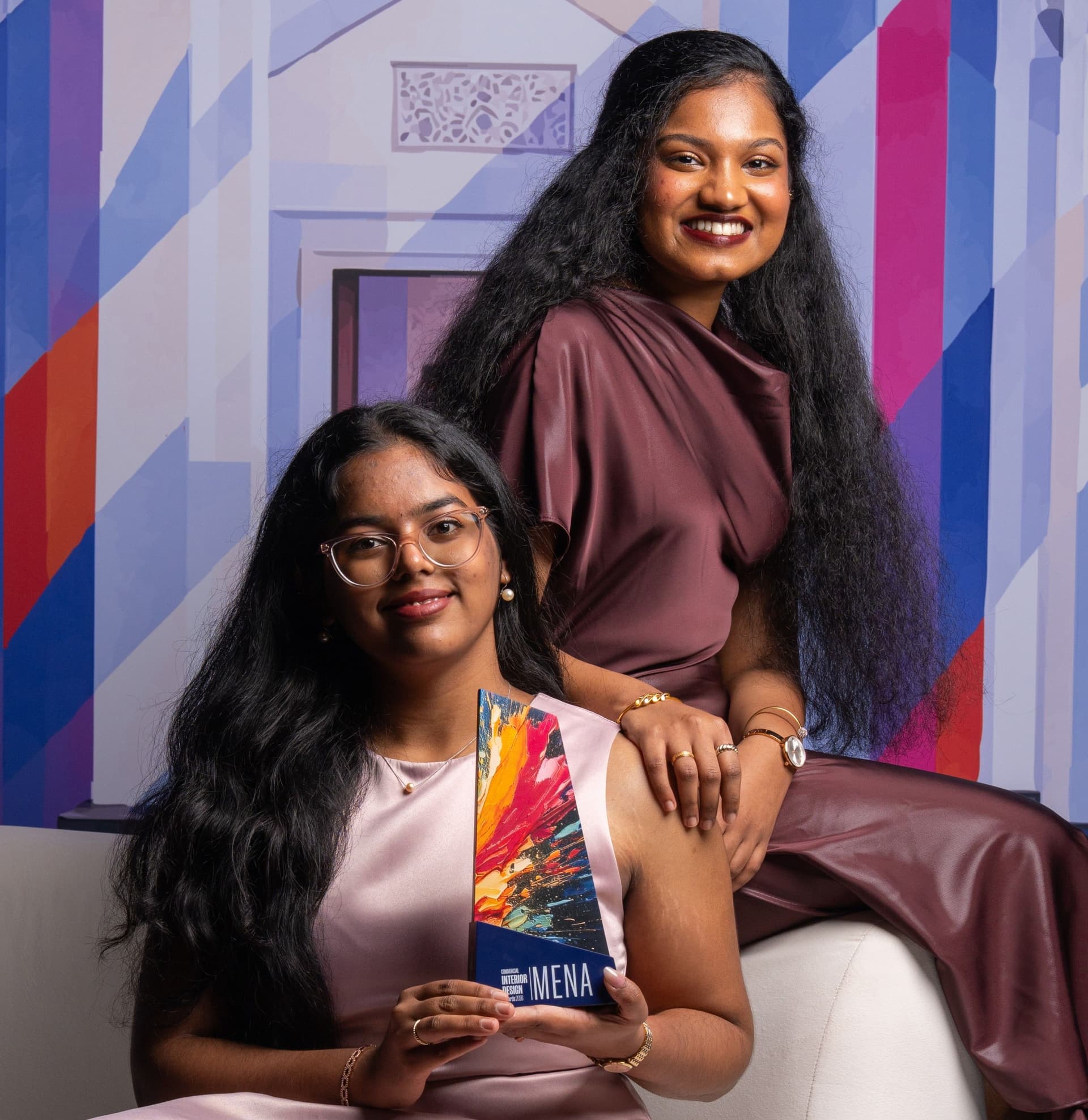
Manipal Academy of Higher Education (MAHE), Dubai is pleased to celebrate the achievements of BDes Interior Design 2026 graduates Harsha Remesh and Abinaya Subramanian, who were recognised at the 20th Commercial Interior Design (CID) Awards 2026 MENA.
The CID Awards – MENA provide a prominent regional platform recognising excellence, innovation and creativity across the design industry. This year, MAHE Dubai graduates received recognition in the Best Student Interior Design Concept of the Year category.
CommuniTEA Center Wins Best Student Interior Design Concept of the Year
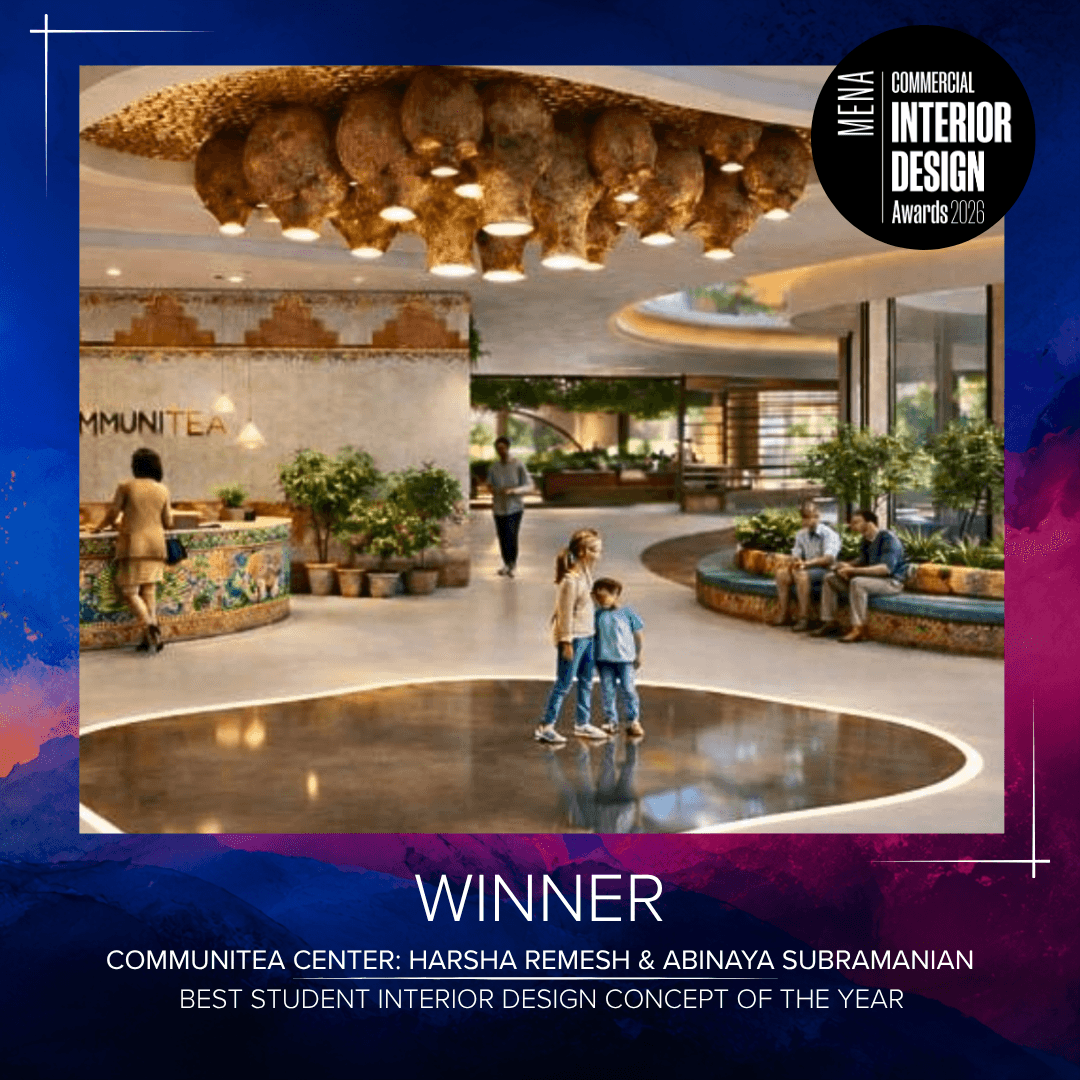
Harsha Remesh and Abinaya Subramanian won the award for their project CommuniTEA Center, guided by Asifa Mahjabeen Noor.
Inspired by the idea “Many Cultures. One Cup. One Community,” the project reimagines tea as more than a beverage, transforming it into a symbol of connection, learning and belonging.
The design explores how interior spaces can go beyond aesthetics to create meaningful experiences, strengthen communities and support emotional wellbeing. It reflects values of innovation, sustainability, cultural sensitivity and social responsibility, demonstrating the wider role design can play in shaping inclusive and connected environments.
Rumi Receives Highly Commended Recognition
Abinaya Subramanian also received a Highly Commended recognition for her Year 4 thesis project, “Rumi, Nurturing Spaces: An Early Childhood Development Centre.”
The project explores how child-centric environments can support children’s cognitive, social, emotional and physical development, while examining the role thoughtfully designed spaces can play in shaping how children learn, grow and connect.
The project was guided by Tasneem Shikari as Thesis and Dissertation Guide, with support from the thesis faculty team comprising Asifa Mahjabeen Noor, Dr. Arushi Malhotra, Adel Sattaripour and Sneha Thomas.
These recognitions reflect the strength of design education at MAHE Dubai’s School of Design & Architecture, where students are encouraged to approach design through creativity, research, social responsibility and real-world relevance.
The achievements of Harsha and Abinaya also highlight the ability of student-led design work to contribute meaningfully to broader conversations around community, wellbeing, sustainability and human-centred spaces.