





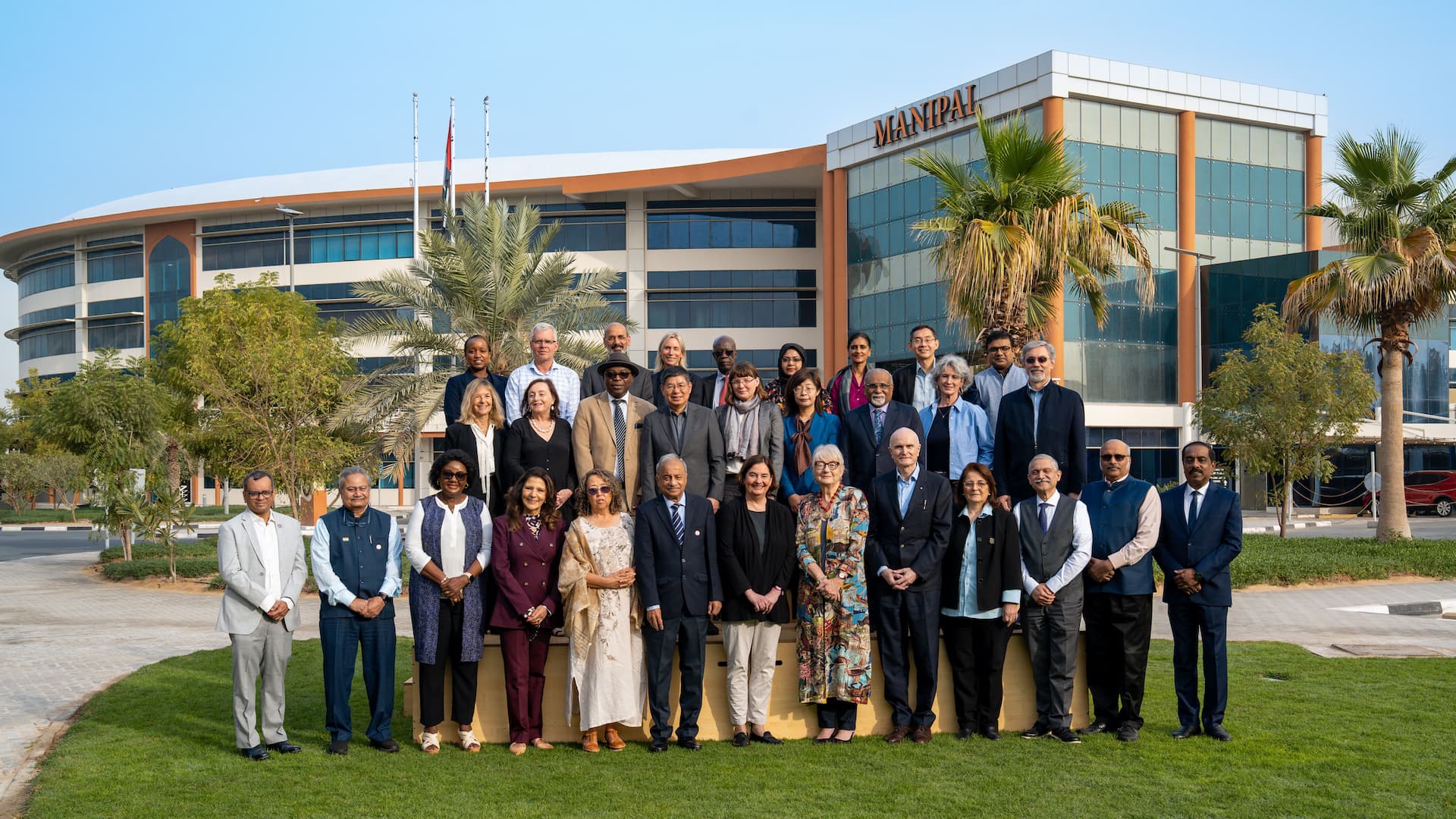
Manipal Academy of Higher Education (MAHE) Dubai hosted a landmark symposium titled “Academic Responsibility in a Fragmented World” in partnership with the World Health Summit (WHS) and The Lancet. The symposium convened global health leaders, academia, industry experts, and regional stakeholders to discuss how academic institutions can strengthen public trust, advance scientific integrity, and drive measurable social impact in an increasingly fragmented world.
Speaking on MAHE’s founding vision and why the campus hosted this initiative, Lt. Gen. (Dr.) M. D. Venkatesh, Vice Chancellor of MAHE, said the theme closely aligns with MAHE’s purpose-driven roots - an institution built to respond to societal needs through education, healthcare, empowerment, and equity. He also highlighted that this year marks MAHE Dubai’s Silver Jubilee, making Dubai an ideal setting for such a globally relevant conversation, given the city’s international character and the campus’ vibrant multicultural community.
As part of its continued commitment to public health education and future-ready learning, MAHE Dubai announced plans to launch a new four-year Bachelor of Public Health program, expected to commence in the 2026-2027 academic year. The program aims to respond to the region’s growing need for trained public health professionals, equipping graduates with a strong understanding of the social, environmental, and systemic factors shaping health outcomes.
Beyond the degree - academia as a catalyst for social good
The symposium featured two keynote addresses followed by a panel discussion titled “Beyond the Degree: Redefining Academia as a Catalyst for Social Good.” The discussion explored how academic institutions can extend their role beyond traditional research outputs by shaping policy, enabling community action, and building stronger collaboration among academia, government, and the private sector.
The panel was moderated by Dr. Cherian Varghese, Professor and Head of Prasanna School of Public Health, MAHE India, and featured distinguished speakers including:
Key insights - impact, trust, and stronger policy dialogue
A central theme across sessions was the need for academia to redefine success and strengthen its connection with society.
Dr. Sabine Kleinert emphasized that publications alone should not define achievement, noting the importance of measuring real-world impact and building the capability to advocate for change. Dr. Axel R. Pries, President of the World Health Summit, reinforced that academic responsibility requires continuous exchange with society - research agendas informed by societal needs, and scientific outcomes communicated in ways that foster dialogue and trust.
Highlighting the responsibility academic institutions carry towards the communities they serve, Prof. Adnan Hyder underlined that knowledge must be integrated into people’s lives through policies, regulations, and community practice - and that communities themselves are also sources of valuable knowledge. Dr. Ilona Kickbusch, Council Chair of the World Health Summit, called for stronger dialogue between academia and policymaking, stressing the need for better mutual understanding and more structured spaces for exchange.