








The Bachelor of Public Health (BPH) at MAHE Dubai is designed to equip students with essential knowledge and practical skills in public health, disease prevention, health promotion, and community well-being. Offered as a three-year BPH and a four-year BPH Honours program, it prepares students to understand and address key healthcare challenges in society.
With the growing need for qualified public health professionals in the UAE and beyond, the program opens pathways to careers in healthcare organisations, public health agencies, NGOs, research institutions, and wellness sectors. Graduates are also well-prepared to pursue higher studies in public health and related disciplines.

Starting Date:

Study Mode:

Program Length:

Application Deadline:
Join us for an exciting opportunity to explore all that Manipal Dubai has to offer at our upcoming Open Days 2026.
Explore More
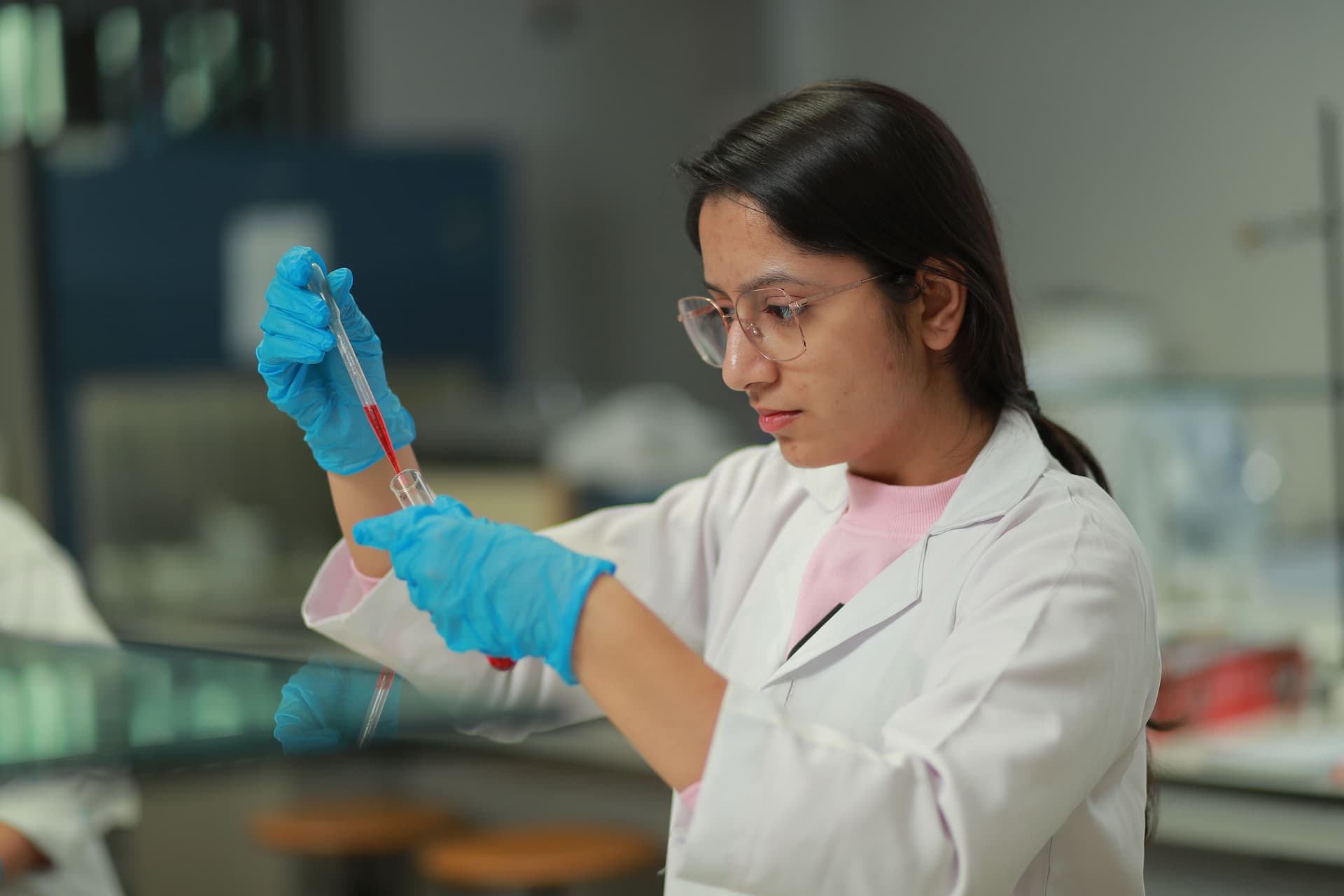
Our students have many opportunities to explore Public Health research. They can use our well-equipped labs to conduct detailed experiments and projects. Students often share their research at local seminars and are encouraged to join workshops and training to improve their skills. This active research culture helps students grow and innovate in their fields.
The Bachelor of Public Health program is guided by highly qualified faculty members, all of whom hold PhDs in their respective areas of expertise. Through academic mentoring, research guidance, and practice-oriented learning, students gain a strong foundation in public health, disease prevention, health promotion, epidemiology, and community health.
The program is strengthened through collaborations like workshops with healthcare organisations, public health bodies, community partners, and industry experts. These engagements support field exposure, awareness campaigns, expert sessions and research-based activities, helping students understand real-world public health practices and emerging healthcare priorities.
Graduates have numerous pathways post-graduation. They include advanced career opportunities in the Public Health sector and further education options such as master's programs in related fields.
Students enrolled in the Bachelor of Public Health program have the opportunity to pursue the Honors pathway by completing an additional fourth year of study. This option allows students to deepen their academic knowledge, strengthen research capabilities, and gain advanced exposure to public health practice, disease prevention, health promotion, and community health. The Honors pathway also prepares graduates for higher studies, research-oriented careers, and advanced roles in public health and healthcare sectors.


To embark on a journey that will shape the future of food and nutrition, candidates must meet the following eligibility criteria:



Upon completion of the program, graduates find themselves well-prepared for a variety of dynamic roles in the industry, including roles like:
The curriculum starts with an intensive focus on core scientific concepts, reinforced through practical laboratory experiences. These activities build a foundational understanding, critical for supporting further specialised study in the Public Health.
| Semester 1 | Semester 2 |
|---|---|
| Fundamentals of Human biology -I (Anatomy and Physiology) | Fundamentals of Human biology -II (Microbiology and Pathology) |
| Introduction to Epidemiology | Communicable and Non-communicable diseases |
| Fundamentals of social and behavioural sciences | Introduction to healthcare systems |
| Introduction to Biostatistics | Intermediate Biostatistics |
| Communication in Context | Basics of Computing using Microsoft Excel |
| Environmental Sciences | Open Elective |
| Field Practicum |
Students will learn survey methods, health information management, health promotion, policy, public health strategy, management, AI in public health, urban studies, communication, and field practicum for applied public health exposure.
| Semester 3 | Semester 4 |
|---|---|
| Survey methods, data collection and management | Social policy and legislations |
| Health Information Management | National Health Strategy and programmes |
| Health Promotion and communication | Principles of management and organizational behaviour |
| Fundamentals of Accounting and Finance | Urban Studies and Development |
| Professional Communication | Artificial Intelligence (AI) in Public Health |
| Field Practicum | Field Practicum |
Students will learn public health ethics, research methodology, health planning, economics, leadership, partnerships, internship practice, healthcare strategy, reproductive health, technology assessment, Arabic, and disaster preparedness.
| Semester 5 | Semester 6 |
|---|---|
| Ethics in public health | Internship (2 months) June and July |
| Research methodology-1 | Strategic management in healthcare |
| Health Planning and Management | Essentials of reproductive health including nutrition |
| Health economics | Essentials of Health Technology Assessment |
| Physical Fitness and Wellness | Introduction to Arabic |
| Leadership, partnership and social mobilization | Disaster & Emergency Preparedness in Healthcare |
| Field practicum |
*Upon successful completion of the third year, students will earn a Bachelors of Public Health degree. Those achieving a CGPA of 8 or above have the opportunity to extend their studies by one year to pursue a Bachelors of Public Health Honours.
(For those opting for the Honours track): The focus shifts to advanced integration of coursework through seminars and journal clubs. It enables students to engage with current research and industry trends critically. This prepares them for professional roles in the Public Health sectors.
| Semester 7 | Semester 8 |
|---|---|
| Evidence Synthesis: Systematic Review and Meta-Analysis | Research Project+ |
| Research methodology -II | Choice based electives |
| Project planning and management | |
| Monitoring and Evaluation | |
| Climate change and one health |

.

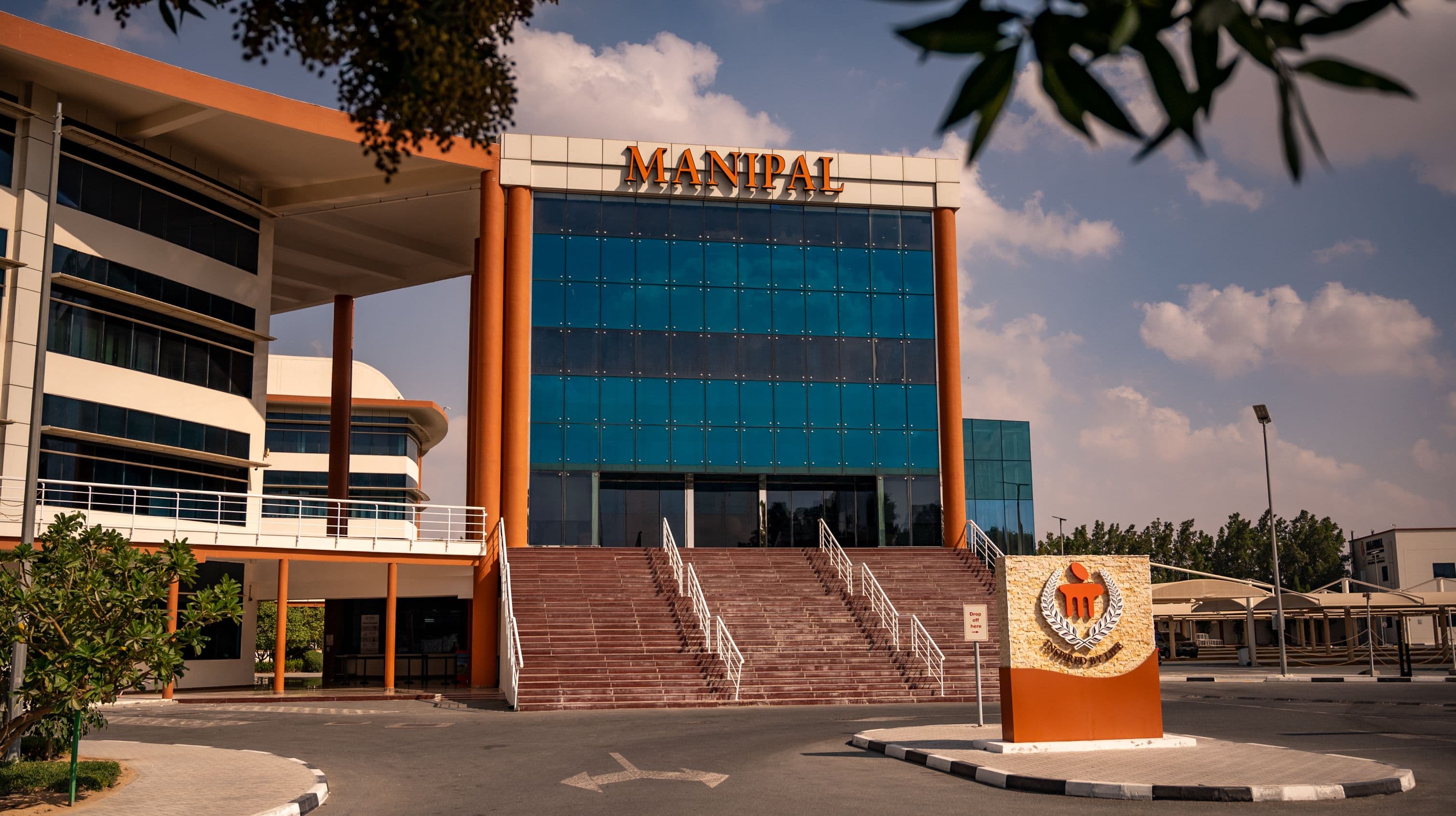
Explore what Manipal Dubai Campus can offer you. From accommodation, study spaces, sports facilities, cafes, restaurants, modern classrooms, advanced labs, and welcoming spaces that inspire learning and creativity.
A Bachelor of Public Health (BPH) is an undergraduate program focused on improving community health through disease prevention, health promotion, and policy development. It combines health sciences, social sciences, and management to address public health challenges.
Public health offers diverse opportunities in healthcare organizations, NGOs, research institutions, and government agencies. With increasing global health challenges, the demand for trained professionals continues to grow.
Students develop skills in epidemiology, data analysis, health communication, policy understanding, and community outreach. They also gain practical exposure through fieldwork and research activities.
Yes, public health is a meaningful and evolving field focused on improving population health. It offers stable career paths and opportunities to work on real-world health issues such as disease prevention and healthcare access.
The BPH program typically lasts 3 years, with an option to extend to 4 years for an honours degree that includes advanced research and specialization.
Applicants must complete 10+2 with Biology, Chemistry, and English, and achieve at least 50% aggregate marks. English proficiency requirements may also apply.
The curriculum includes epidemiology, biostatistics, health promotion, healthcare systems, public health policy, environmental health, and research methodology.
Yes, most BPH programs include internships and field practicums that provide real-world exposure in healthcare settings and community health initiatives.
Graduates can work as public health officers, health promotion executives, epidemiology assistants, research assistants, and community health workers across healthcare and research sectors.
Yes, students can pursue postgraduate programs such as Master of Public Health (MPH) or related fields to advance their careers in research, policy, or specialized healthcare roles.
You should evaluate curriculum relevance, practical exposure, research opportunities, faculty expertise, and career outcomes. Industry collaborations and internship access are also important.
The annual tuition fee is approximately AED 50,925, along with a one-time application and registration fee of around AED 3,150.
The program offers experienced faculty mentorship, research opportunities, workshops with industry partners, and access to modern labs. It also provides exposure to real-world public health practices through collaborations and fieldwork.
Yes, the program includes field practicums, internships, workshops, and research projects that help students gain hands-on experience in community health and healthcare systems.
Graduates can explore roles such as public health assistant, health program coordinator, infection control assistant, research assistant, and healthcare executive across various sectors.
Bioinformatics offers strong career scope due to the increasing demand for data-driven solutions in healthcare, pharmaceuticals, and biotechnology. Professionals can work in research labs, biotech firms, and healthcare organizations.
The program typically lasts 2 years, with a mix of theoretical coursework, lab sessions, and research-based projects.
Applicants usually need a bachelor’s degree in life sciences, biotechnology, microbiology, or a related discipline. Basic knowledge of mathematics or programming may be beneficial.
The curriculum generally includes genomics, proteomics, biostatistics, computational biology, programming (Python/R), and database management.