






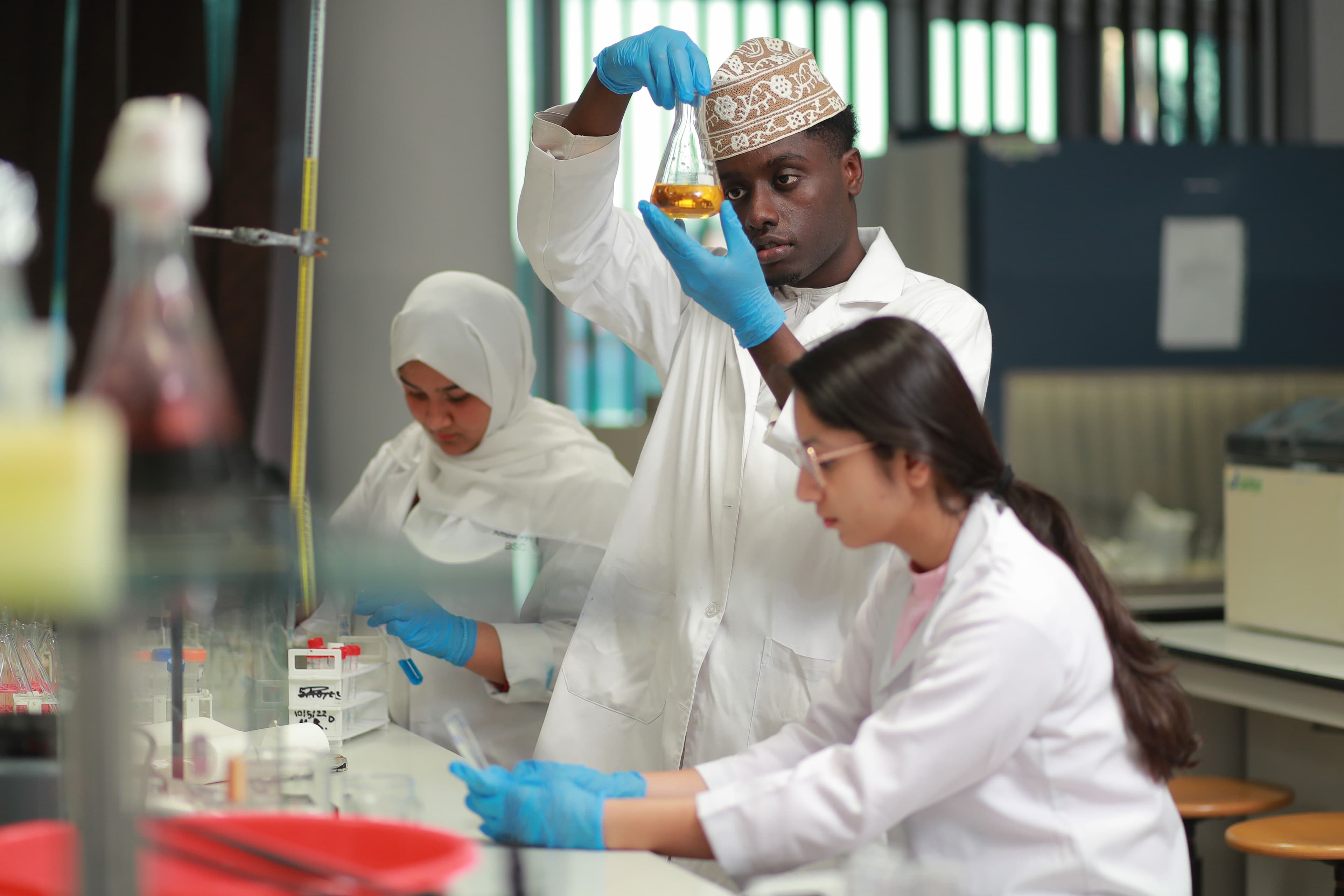


Welcome to the Manipal Institute of Health & Life Sciences – A Hub for Aspiring Scientists and Innovators.
At Manipal Dubai, we proudly host a vibrant community of students from over 45 nationalities, fostering a diverse and inclusive environment where dreams take flight and careers are built.
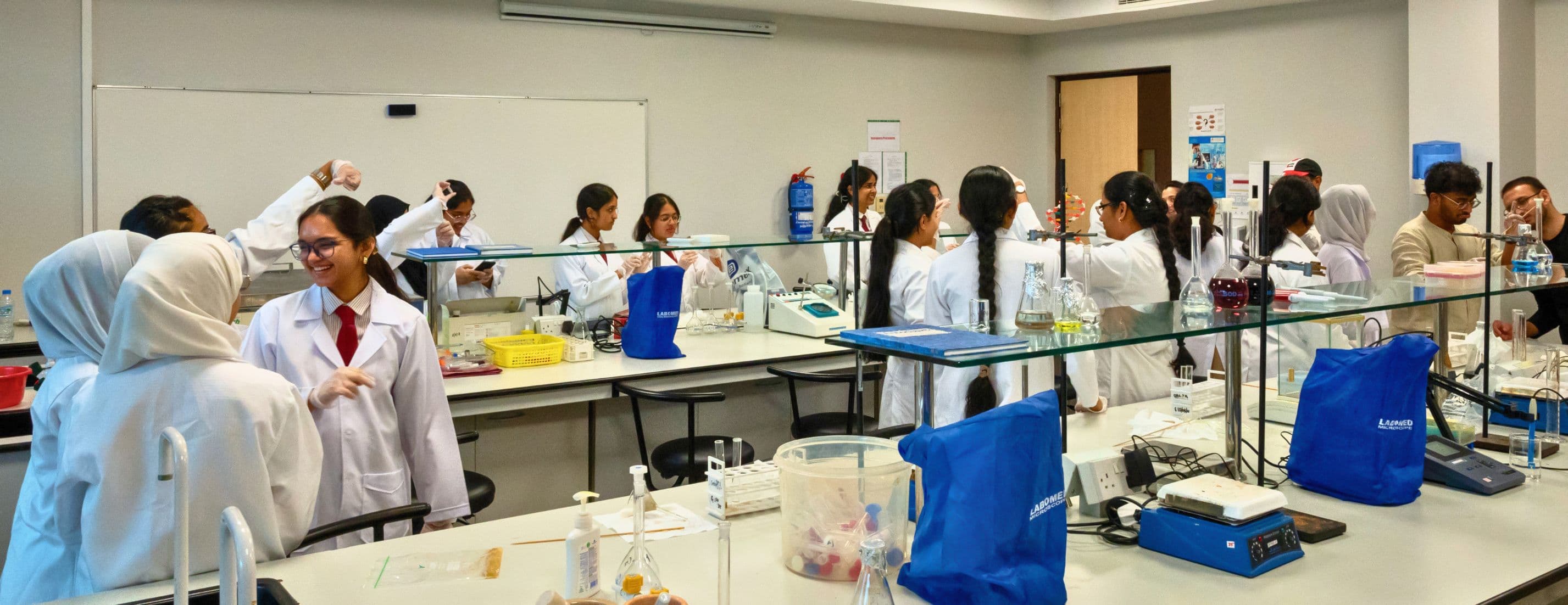
The Institute stands as a beacon of excellence for budding scientists and innovators. Offering 7 specialized programs, we provide a robust foundation in life sciences, seamlessly blending in-depth theoretical knowledge with hands-on practical experience.
Our accomplished faculty, cutting-edge laboratories, and advanced research opportunities empower students to push the boundaries of scientific discovery. Collaborations with prestigious institutions and industry leaders ensure that our students are equipped to tackle global challenges in healthcare, biotechnology, and beyond.
With the support of a dynamic alumni network and a strong focus on innovation, the Manipal Institute of Health & Life Sciences paves the way for unparalleled academic and professional success.

Message from Dr. Arif Hussain, Dean
Since 2004, the Manipal Institute of Health & Life Sciences at MAHE Dubai has been dedicated to delivering quality education through a unique blend of research-driven teaching and experiential learning. Our legacy is reflected in the achievements of over 650 alumni who have gone on to build successful careers in diverse fields such as cancer research, microbial biotechnology, human genetics, nutrition and dietetics, Public Health, Bioinformatics and food safety. Many of them are now making significant contributions at renowned institutions around the globe.
Our undergraduate and postgraduate programs are thoughtfully designed to provide students with a balance of academic rigor and industry-relevant skills. Our highly experienced faculty ensure hands-on laboratory training and actively encourage students to participate in research competitions and conferences, where their efforts have been recognized and celebrated with numerous awards.
Every academic year is a rich tapestry of research-focused learning, complemented by workshops, field visits, guest lectures, and a variety of extracurricular activities. This holistic approach ensures that our students graduate not only with a solid foundation in life sciences but also with the confidence and expertise to thrive in this dynamic field.
We are proud of the vibrant community we’ve built and look forward to welcoming the next generation of innovators and leaders to the Manipal Institute of Health & Life Sciences at MAHE Dubai.
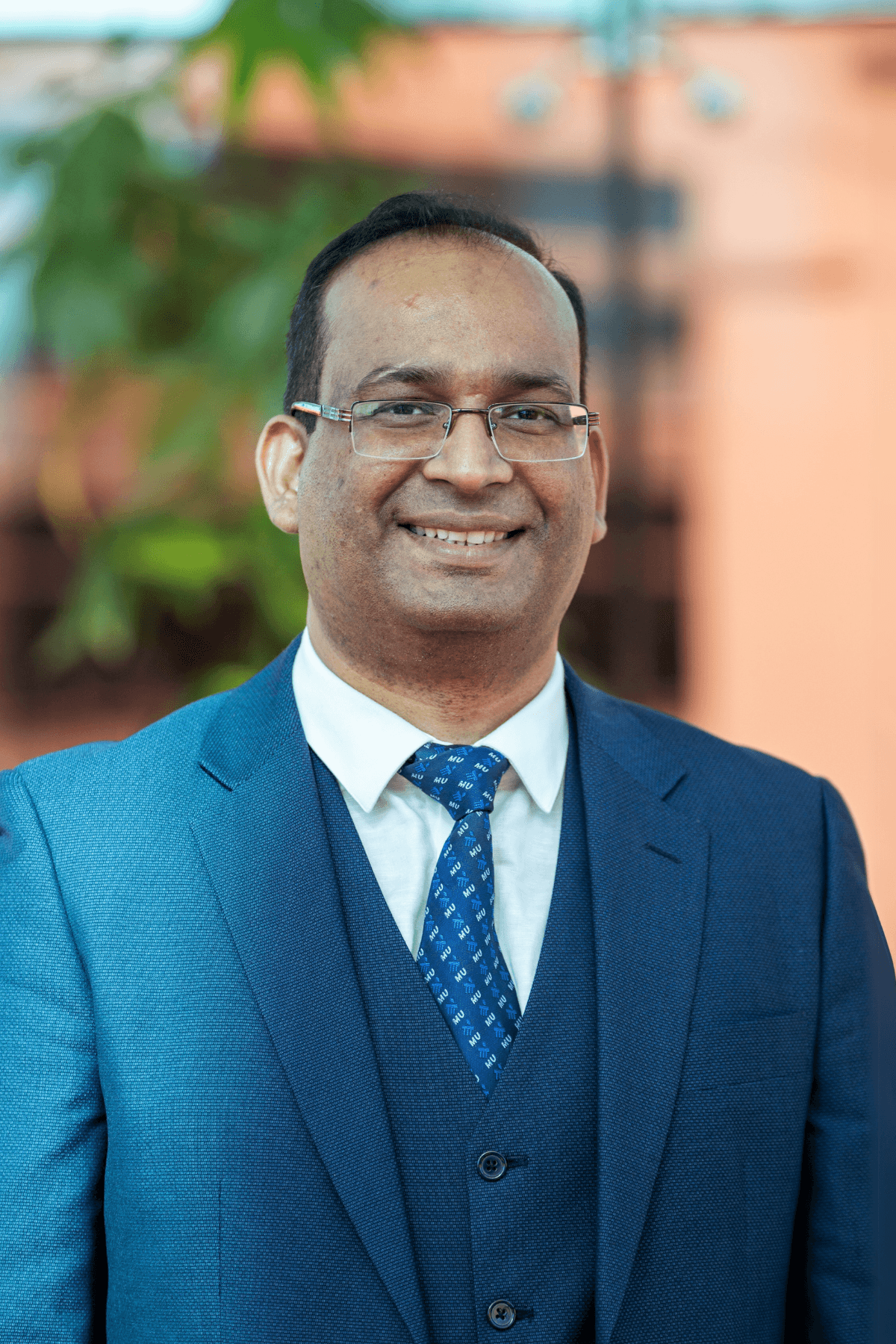





Professor and Dean

Assistant Professor

Assistant Professor

Assistant Professor

Associate Professor

Associate Professor

Assistant Professor

Assistant Professor



BSc in Food and Nutrition is an undergraduate program focused on nutritional science, diet planning, food safety, and public health nutrition.
The program typically spans three to four years, including laboratory sessions and research-based coursework.
Students study human nutrition, food chemistry, dietetics, microbiology, food safety standards, and public health nutrition.
Increasing health awareness and wellness initiatives in the UAE create opportunities in hospitals, wellness centers, food industries, and research organizations.
Students gain analytical ability, laboratory skills, dietary planning competence, food quality assessment knowledge, and research capabilities.
The growing emphasis on preventive healthcare and nutrition education supports career opportunities for qualified professionals.
Students from South Africa studying nutrition in Dubai can benefit from exposure to international health practices, modern nutrition research environments, and multicultural learning experiences.
Fees depend on laboratory infrastructure, academic facilities, and research resources provided by the institution.
Many programs incorporate internships, clinical exposure, or industry-based training for practical experience.
Yes, graduates can pursue master’s degrees in nutrition, dietetics, public health, or food science.
Yes, students from GCC countries can enroll in BSc Food and Nutrition programs in Dubai if they meet the academic eligibility requirements and submit the required admission documents.
Career growth depends on specialization and experience, with opportunities in healthcare, research, and food industries.
Manipal University Dubai BSc Food and Nutrition emphasizes scientific learning, lab exposure, and curriculum aligned with UAE health standards.
Applicants must submit academic transcripts, meet eligibility criteria, and complete the university’s admission review process.
The Registration Fees + Application Fees (inclusive of 5% VAT) for the BSc – Food & Nutrition Science program are AED 3,150. The Annual Tuition Fee (inclusive of 5% VAT) is AED 57,750.
Graduates can work in healthcare institutions, wellness centers, food manufacturing companies, and research organizations.
Yes, the BSc Food and Nutrition program at Manipal Academy of Higher Education Dubai attracts students from India, Europe, Southeast Asia, and Africa, creating a multicultural learning environment in nutrition science.
BSc Biotechnology is an undergraduate science degree focused on genetics, microbiology, molecular biology, and bioprocess technology.
The program typically spans three years, combining theoretical coursework with laboratory training.
Students study cell biology, genetic engineering, immunology, microbiology, biochemistry, and industrial biotechnology processes.
Biotechnology graduates can explore roles in pharmaceutical companies, research labs, healthcare industries, and environmental organizations.
Students gain laboratory competence, research methodology knowledge, analytical thinking skills, and understanding of biotechnological applications.
Advances in healthcare, life sciences, and environmental sustainability increase demand for biotechnology professionals in the UAE.
Fees vary depending on laboratory facilities, research infrastructure, and academic resources provided by the institution.
Yes, graduates can pursue master’s degrees in biotechnology, biomedical sciences, genetics, or related life science fields.
Yes, biotechnology programs in Dubai attract students from several GCC countries because the city offers internationally oriented science education and access to modern laboratory learning environments.
Many programs incorporate lab-based projects, research exposure, or internships to provide practical experience.
Students from GCC countries who complete biotechnology studies in Dubai can explore opportunities in research centers, healthcare organizations, and biotechnology-related industries across the Gulf region.
Career growth depends on specialization and further education, with opportunities in research, pharmaceuticals, and healthcare industries.
Fees vary depending on laboratory facilities, research infrastructure, and academic resources provided by the institution.
Yes, graduates can pursue master’s degrees in biotechnology, biomedical sciences, genetics, or related life science fields.
Yes, biotechnology programs in Dubai attract students from several GCC countries because the city offers internationally oriented science education and access to modern laboratory learning environments.
Many programs incorporate lab-based projects, research exposure, or internships to provide practical experience.
Students from GCC countries who complete biotechnology studies in Dubai can explore opportunities in research centers, healthcare organizations, and biotechnology-related industries across the Gulf region.
Career growth depends on specialization and further education, with opportunities in research, pharmaceuticals, and healthcare industries.
Manipal University Dubai BSc Biotechnology offers laboratory-focused learning and curriculum aligned with evolving life sciences sectors.
Applicants must meet academic eligibility criteria, submit required documents, and complete the university’s admission review.
The Registration Fees + Application Fees (inclusive of 5% VAT) for the BSc – Biotechnology program are AED 3,150. The Annual Tuition Fee (inclusive of 5% VAT) is AED 57,750.
Graduates can pursue roles in research laboratories, pharmaceutical companies, healthcare organizations, and biotechnology firms.
Yes, the BSc Biotechnology program at Manipal Academy of Higher Education Dubai includes students from India, Europe, Southeast Asia, and Africa, providing exposure to diverse academic perspectives in life sciences.
The MSc in Nutrition and Dietetics is a postgraduate program that focuses on advanced concepts in human nutrition, clinical dietetics, food science, community health, and nutritional research.
The program generally spans two years, combining theoretical coursework, lab practicals, and clinical or community-based training.
Students study advanced biochemistry, food science, therapeutic nutrition, public health nutrition, nutritional assessment, research methodology, and diet planning.
Graduates can work in hospitals, wellness centers, food industries, research institutions, public health organizations, and fitness or lifestyle sectors across the UAE.
The course helps students build expertise in clinical diet planning, patient counselling, food analysis, research techniques, community nutrition strategies, and scientific data interpretation.
Yes, with rising interest in preventive healthcare, lifestyle management, and clinical nutrition, the demand for qualified nutrition professionals is growing in the UAE.
Tuition fees vary based on laboratory facilities, clinical training availability, and the academic resources offered by the university.
Graduates can advance into research roles or pursue doctoral programs in clinical nutrition, dietetics, food science, or public health.
Yes, many GCC students choose Dubai for its multicultural academic setting, practical learning opportunities, and modern nutrition and food science labs.
Most universities include hospital rotations, community nutrition projects, or food industry internships as part of the curriculum.
Yes, graduates can explore opportunities in hospitals, public health departments, wellness and fitness centers, and food industry organizations throughout the Gulf.
Career growth is strong for students who specialize in clinical dietetics, sports nutrition, public health nutrition, and food quality management.
The program offers a practical, research-driven curriculum supported by modern laboratories, experienced faculty, and industry-linked training.
Applicants must fulfil academic eligibility requirements, submit necessary documents, and complete the university’s admission review process.
The Registration Fees + Application Fees (inclusive of 5% VAT) for the Msc Nutrition and Dietetics are AED 1,680. The Annual Tuition Fee (inclusive of 5% VAT) is AED 45,675.
Graduates can work as clinical dietitians, nutrition consultants, wellness specialists, food analysts, research assistants, or public health nutritionists.
Yes, the MSc in Nutrition and Dietetics program at Manipal Academy of Higher Education Dubai includes students from India, Europe, Southeast Asia, and Africa, providing exposure to diverse academic perspectives in life sciences.
A Master’s Degree in Biotechnology is an advanced postgraduate program focusing on molecular biology, genetic engineering, bioinformatics, bioprocessing, and research-driven applications in life sciences.
The program generally spans two years, combining theoretical coursework, laboratory experiments, and research-based project work.
Students study advanced genetics, molecular biology, microbiology, biostatistics, bioinformatics, immunology, bioprocess engineering, and research methodology.
Students study advanced genetics, molecular biology, microbiology, biostatistics, bioinformatics, immunology, bioprocess engineering, and research methodology.
Graduates can work in research laboratories, pharmaceutical industries, healthcare organizations, environmental biotechnology firms, and biotechnology-focused startups.
Learners develop advanced lab techniques, research skills, data analysis capabilities, critical thinking, and expertise in handling modern biotechnological tools.
Yes, Dubai’s investment in healthcare innovation, biotechnology research, sustainable solutions, and pharmaceutical development makes biotechnology a strong career choice.
Fees differ depending on laboratory infrastructure, faculty expertise, and research facilities provided by the institution.
Yes, graduates can pursue PhD programs in biotechnology, genetics, molecular biology, biomedical sciences, or other specialized life science fields.
Yes, students from GCC nations often choose Dubai for its global academic environment, advanced laboratories, and strong life science industry connections.
Most universities include dissertation work, research projects, laboratory training, or internships to provide hands-on experience.
Yes, graduates can explore opportunities in research centers, biotechnology companies, pharmaceutical firms, and healthcare organizations throughout the Gulf.
Yes, career progression is promising in areas such as research and development, pharmaceuticals, diagnostics, and environmental biotechnology.
The program offers industry-aligned curriculum, advanced laboratory training, and research-focused learning guided by experienced faculty.
Applicants must meet academic eligibility criteria, submit relevant documents, and undergo the university’s admission review process.
The Registration Fees + Application Fees (inclusive of 5% VAT) for the Master’s Degree in Biotechnology are AED 1,680. The Annual Tuition Fee (inclusive of 5% VAT) is AED 45,675.
Graduates can pursue roles in biotech companies, pharmaceutical industries, research institutions, healthcare labs, and environmental organizations.
Yes, the Master’s Degree in Biotechnology program at Manipal Academy of Higher Education Dubai includes students from India, Europe, Southeast Asia, and Africa, providing exposure to diverse academic perspectives in life sciences.
A Bachelor of Public Health (BPH) is an undergraduate program focused on improving community health through disease prevention, health promotion, and policy development. It combines health sciences, social sciences, and management to address public health challenges.
Public health offers diverse opportunities in healthcare organizations, NGOs, research institutions, and government agencies. With increasing global health challenges, the demand for trained professionals continues to grow.
Students develop skills in epidemiology, data analysis, health communication, policy understanding, and community outreach. They also gain practical exposure through fieldwork and research activities.
Yes, public health is a meaningful and evolving field focused on improving population health. It offers stable career paths and opportunities to work on real-world health issues such as disease prevention and healthcare access.
The BPH program typically lasts 3 years, with an option to extend to 4 years for an honours degree that includes advanced research and specialization.
Applicants must complete 10+2 with Biology, Chemistry, and English, and achieve at least 50% aggregate marks. English proficiency requirements may also apply.
The curriculum includes epidemiology, biostatistics, health promotion, healthcare systems, public health policy, environmental health, and research methodology.
Yes, most BPH programs include internships and field practicums that provide real-world exposure in healthcare settings and community health initiatives.
Graduates can work as public health officers, health promotion executives, epidemiology assistants, research assistants, and community health workers across healthcare and research sectors.
Yes, students can pursue postgraduate programs such as Master of Public Health (MPH) or related fields to advance their careers in research, policy, or specialized healthcare roles.
You should evaluate curriculum relevance, practical exposure, research opportunities, faculty expertise, and career outcomes. Industry collaborations and internship access are also important.
The annual tuition fee is approximately AED 50,925, along with a one-time application and registration fee of around AED 3,150.
The program offers experienced faculty mentorship, research opportunities, workshops with industry partners, and access to modern labs. It also provides exposure to real-world public health practices through collaborations and fieldwork.
Yes, the program includes field practicums, internships, workshops, and research projects that help students gain hands-on experience in community health and healthcare systems.
Graduates can explore roles such as public health assistant, health program coordinator, infection control assistant, research assistant, and healthcare executive across various sectors.
Bioinformatics offers strong career scope due to the increasing demand for data-driven solutions in healthcare, pharmaceuticals, and biotechnology. Professionals can work in research labs, biotech firms, and healthcare organizations.
Students gain skills in programming, statistical analysis, molecular biology, data interpretation, and the use of bioinformatics tools for analyzing biological datasets.
Yes, bioinformatics is a growing field driven by advancements in genomics, AI in healthcare, and personalized medicine, making it a relevant and future-focused career path.
The program typically lasts 2 years, with a mix of theoretical coursework, lab sessions, and research-based projects.
Applicants usually need a bachelor’s degree in life sciences, biotechnology, microbiology, or a related discipline. Basic knowledge of mathematics or programming may be beneficial.
The curriculum generally includes genomics, proteomics, biostatistics, computational biology, programming (Python/R), and database management.
Many programs include internships or research projects that provide hands-on experience in laboratories, research institutions, or biotech companies.
Key specializations include genomics, drug discovery, structural bioinformatics, systems biology, and computational biology.
Yes, graduates can pursue Ph.D. programs or advanced research in bioinformatics, computational biology, or related interdisciplinary fields.
Important factors include curriculum quality, research facilities, faculty expertise, internship opportunities, and alignment with your long-term career goals.
The program fee is approximately AED 45,675 per year, along with a one-time application and registration fee. The total cost may vary slightly depending on additional academic charges.
The program offers an interdisciplinary curriculum, modern lab facilities, and exposure to real-world applications such as genomics and data science in biology. It also emphasizes practical learning through projects and research.
Yes, the program includes lab work, computational projects, and research assignments that help students gain hands-on experience in analyzing biological data.
Graduates can explore roles such as bioinformatics analyst, computational biologist, research associate, or data scientist in healthcare, biotechnology, and pharmaceutical sectors.